
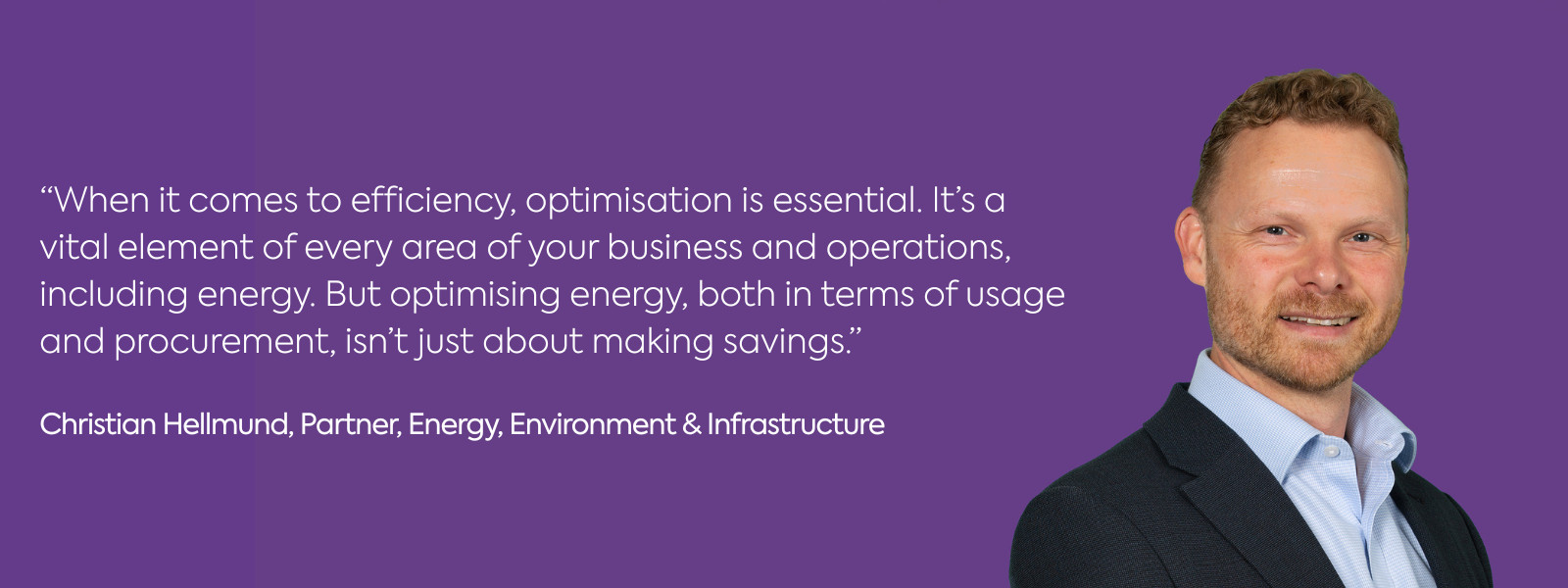
When it comes to efficiency, optimisation is essential. It’s a vital element of every area of your business and operations, including energy. But optimising energy, both in terms of usage and procurement, isn’t just about making savings. It does play a key role in managing rising operational costs, but it also helps to meet emissions and sustainability targets, as well as improving the competitive nature of your business.
For UK manufacturers, rising input costs and regulatory pressure means that optimising energy (including electricity, gas, heat or other input fuels) use is more important than ever. Manufacturers across the country are actively investing in digital technologies and smart energy systems to help and improve efficiency. But the reality of this is that many of those that have invested in the tech, may not be making full use of the systems they’ve put in place for various reasons including limitations of inter-operability between technologies, equipment and data collection and analytic devices.
What is smart energy, and why does it matter?
You may have heard the term “smart energy” from time to time, but it’s not always immediately obvious as to what it entails. Essentially, smart energy refers to integrating and using digital technologies to monitor, control, and optimise energy consumption, either in real-time or near-real-time. It’s a highly effective method of improving energy efficiency within a building, certain technologies, and equipment and manufacturing processes, which can prove to be exceptionally valuable for manufacturers in particular. It includes the use of:
- Sensors and IoT devices.
- AI/machine learning.
- Automated control systems.
- Energy dashboards, energy data collection and analytics platforms.
- Predictive maintenance and optimisation tools.
Today, energy and operating costs are rising, and there is increased scrutiny of Scope 2 emissions in the manufacturing space. There is also more pressure to reduce downtime, and in turn reduce energy waste and system inefficiencies. Smart energy systems help to address these challenges, whilst also providing opportunities to participate in flexibility services such as demand side response (DSR) or demand flexibility services (DFS).
Implementing these systems can help to reduce energy bills whilst boosting operational efficiency and also help to reinforce ESG performance to support net zero targets, comply with frameworks such as ISO 50001 (i.e. a voluntary, international standard which provides a framework for organisations of any size to establish, implement, maintain, and improve its energy management system thereby reducing consumption and costs) and comply with current UK emissions reporting requirements (including SECR) and future sustainability disclosure requirements, including the envisaged UK Sustainability Reporting Standards (UK SRS) (currently under consultation).
What are the use cases of smart energy systems for manufacturers?
Whilst the above gives a very brief and general overview of smart energy systems, understanding the intricacies of the technology and its use cases opens up a much vaster and more detailed list of potential benefits. Each use case provides tangible benefits and results for manufacturers. To help you develop a deeper understanding of some of the use cases of smart energy systems, here are some detailed insights of where they can make a difference for those that implement them:
- Sub-metering and granular monitoring
Tracking is an incredibly powerful (and valuable) asset for manufacturing processes and operations. For energy, smart energy tech enables you to keep an eye on energy use in a more granular fashion, such as by process, by machine, or by department for example. This granular view can help you to identify any potential “phantom” energy losses, such as situations where machines might be running unnecessarily. The information it provides can also be used to support investment decisions, maybe in cases where you need to decide on whether machinery needs to be replaced vs repaired.
One important thing to note is that when looking for sub-metering suppliers or data access platform providers, you’ll need to carefully review your contracts around data access, alignment with your utility supply or even utility broker contracts to ensure provision of required date for volume/ tolerance control and forecasting as well as liabilities and potential compensation for the provider’s failure to comply with service levels or other KPIs, so that you don’t fall victim to any potential problems after integration.
- AI-powered energy management systems
Artificial Intelligence (AI) is transforming the way we live and work, and as a sector, manufacturing is no stranger to its potential. Whilst its capabilities have already transformed a number of manufacturing processes, it also plays a crucial role in smart energy technology. For example, tech with machine learning algorithms allows for demand forecasting, automated responses to tariff changes, and suggestions for load shifts or adjustments. This becomes incredibly useful in cases where you may want to reduce energy load at expensive grid times with automated peak-shaving.
However, from a legal standpoint, it’s essential to identify where adoption could trigger compliance issues. Automated decision-making needs to be managed carefully so as not to cause issues in areas such as data protection, volume or forecasting obligations under your utility supply contracts or under more sophisticated flexibility services you may provide.
- Automation of lighting, HVAC, compressed air systems and more
As you might already know, these systems are likely responsible for a pretty significant percentage of your energy use, particularly if you have large warehouses and production environments. But much like the situations we described in the two previous use cases, you can use smart energy technology to automate these systems and benefit from better-optimised energy usage. It also helps to provide more predictive maintenance scheduling. These benefits combined can give you some quick wins with reasonably short return on investment periods.
- Demand Side Response (DSR) / Demand Flexibility Service (DFS) and participation in flexibility markets
Alongside the cost saving capabilities of smart energy tech, manufacturers can also benefit from receiving payments from optimising their energy by reducing or shifting energy use at key times. To achieve this, you’ll need technology that can respond to grid signals, which will also require contracts with aggregators or energy suppliers. Such agreements are often complex and it’s essential that you fully understand key areas of risk as well as performance obligations and potential penalties. Making the most of DSR or DFS contracts requires careful balancing of the commercial benefits against operational risk.
What should you consider before investing in smart energy?
Successfully adopting smart energy and energy optimisation technologies means asking yourself some key questions beforehand. It’s about preparation and understanding so that you can reap the most benefits from it:
- Digital infrastructure readiness – Are your facilities connected enough for real-time monitoring? Do you have any legacy machines that may not be compatible with IoT or cloud-based tools?
- Internal resources and change management – How will you approach upskilling your workforce for energy optimisation? Will you need to introduce new internal roles? Should you consider bringing in any external consultants or tech partners?
- Procurement and legal protections – How will you address areas where common issues can occur in smart energy projects:
- Intellectual property and data protection - who owns usage data and who can access it?
- Service level agreements, particularly around uptime and responsiveness
- Who is liable for underperformance or incorrect optimisation?
- How will integration risks with existing systems be managed?
- How will you negotiate contracts with technology vendors, energy consultants, brokers, platforms, suppliers and flexibility market aggregators or network/system operators?
These are just a handful of questions, but answering them is crucial to preparation and planning. Once you understand your position, you’re much more likely to tip the scales in favour of successful adoption, rather than subjecting yourself to the potential fallout of new risks and penalties.
Smart energy is more than just technology
It’s strategy. With the right approach, you can take more control over your costs and commercial performance, as well as building a better foundation for asset optimisation, emissions and sustainability management and performance. But proper strategic planning and execution is critical. That’s where we can help. We advise manufacturers and asset owners across the UK, supporting them with everything from utility supply, technology and IT contracts to DSR and DFS schemes, to contractual arrangements for digital optimisation and risk planning. To find out more about how we can support you, don’t hesitate to get in touch with our expert Energy and Infrastructure lawyers.